Interactive screen use and AR VR interfaces
VR/AR tools to visualise, plan, and collaborate on cultural heritage renovations.
Renovating and maintaining cultural heritage buildings is complex, with challenges like limited access, fragile structures, and the need for precise planning. This service uses cutting-edge VR and AR technology to make this process easier and safer. Explore renovation process and enhance on-site training in virtual reality, compare renovation effects with augmented reality, and collaborate effectively with all stakeholders to ensure better planning, improved efficiency, and protection of historical value.
Key Features
-
VR-based Pre-Intervention Planning
Explore and simulate renovation processes and scenarios before any physical work begins.
-
AR-based On-Site Maintenance
Overlay digital information onto the physical site to guide maintenance and renovation tasks.
-
VR-Based Training
Interactive, on-the-job guidance for staff, improving safety and skill development.
-
Scenario Comparison
Visualise before-and-after renovation outcomes in AR to support informed decision-making.
-
Data Integration
Combines BIM models, sensor data, photogrammetry, and renovation plans for precise simulations.
-
Environmental Monitoring
Real-time tracking of temperature, humidity, CO₂, and other conditions to protect sensitive structures.
-
Scalable & Customisable
Adaptable to other heritage sites with minimal setup and tailored to local regulations.
Benefits
-
Reduces risks to fragile heritage structures
-
Improves planning accuracy and renovation efficiency
-
Enhances stakeholder engagement and transparency
-
Enables data-driven, evidence-based decision-making
-
Supports training and skill development for maintenance personnel
How it works
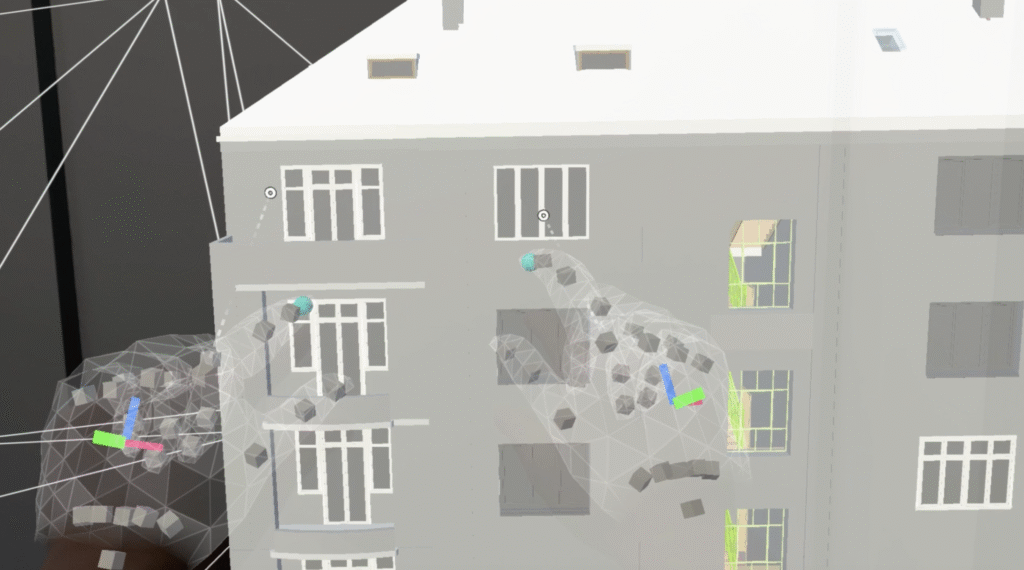
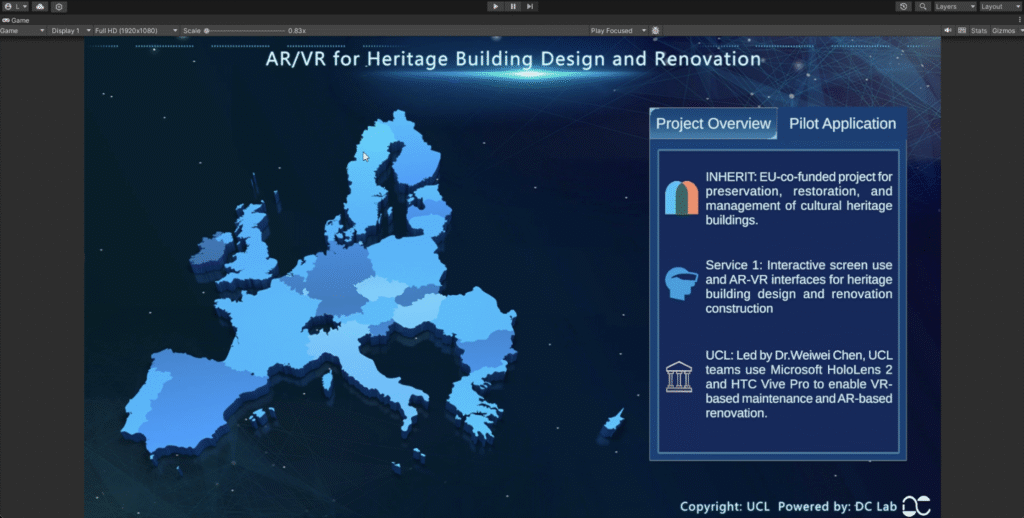
This service streamlines heritage renovation by integrating AR and VR technology with comprehensive building data. On-site, AR devices like Microsoft HoloLens 2 guide staff through maintenance information and renovation scenarios, overlaying digital information directly onto the structure, while VR environments allow stakeholders to explore the building virtually and simulate renovation steps.
Sensors continuously track environmental conditions – temperature, humidity, noise, and CO₂ – ensuring interventions are sensitive to the building’s needs. All relevant data, including BIM models, renovation plans, local regulations, and optional 3D scans, feed into a central system to provide real-time and historical insights for informed decision-making.
Through intuitive VR and AR tools, users can visualise proposed changes, compare before-and-after scenarios, get trained, and access contextual information on-site. The integrated management hub consolidates all information – BIM models, sensor readings, renovation strategies, and maintenance records – into a single platform for planning, training, and collaboration.
By combining immersive technologies with rich data, the system enables precise, evidence-based renovation decisions while safeguarding the historical and structural integrity of heritage buildings.