Data exchange platform
A secure, modular platform to share and manage cultural heritage built-environment data.
The Data Exchange Platform is a centralised space to upload, manage, and share datasets across the project ecosystem. Designed for the cultural heritage (CH) built environment and compliant with European Data Spaces, it provides a secure, modular, and scalable framework for handling both real-time and long-term data from diverse sources.
Key features
-
Identity provisioning
Secure user access via Keycloak following OpenID Connect (OIDC) standards.
-
Real-time data storage
Sensor data flows through an MQTT broker, processed by APIs, and stored in PostgreSQL for near real-time monitoring and analysis.
-
Static data storage
Long-term files and backups are stored in MinIO, an S3-compatible system ensuring security, scalability, and reliability.
-
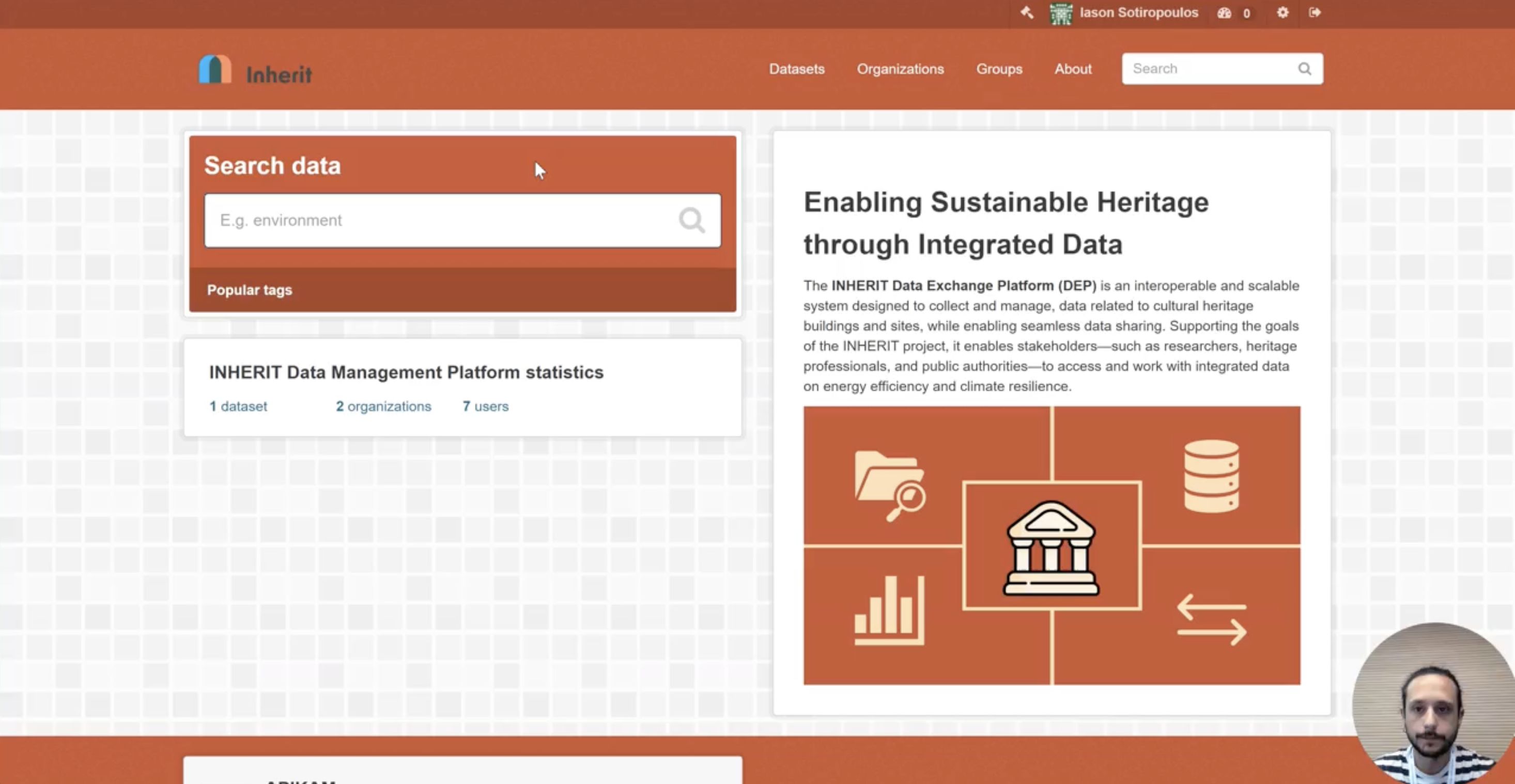
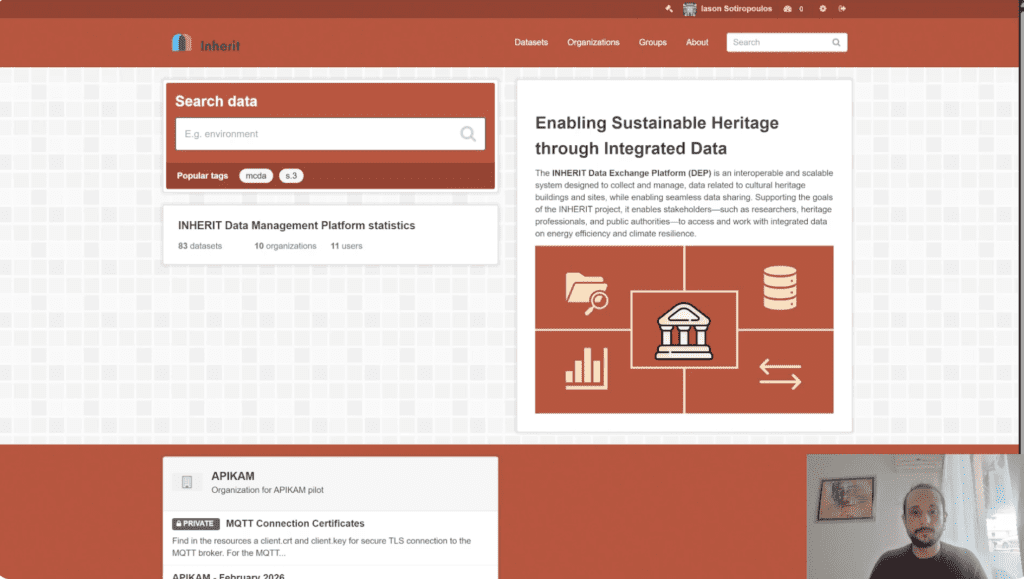
Data Portal
A customized CKAN interface allows users to browse, upload, and manage datasets, keeping them findable, accessible, interoperable, and reusable (FAIR).
Benefits
-
Provides a single, unified entry point for all project data
-
Ensures secure, authenticated access to sensitive and heritage information
-
Supports both real-time sensor streams and large archived datasets
-
Keeps data findable, interoperable, and reusable (FAIR-aligned)
-
Supplies dependable data to advanced analysis and decision-support tools
-
Preserves full traceability and version history across datasets
How it works
The Data Exchange Platform unifies project data in a secure, scalable environment designed for real-time acquisition, long-term storage, and easy discovery. At its core, the CKAN-based Data Portal provides a single entry point to browse, upload, and manage datasets, supported by consistent metadata, FAIR principles, and collaboration features. Keycloak manages user authentication and role-based permissions for sensitive information.
Sensor data is collected via MQTT, processed by backend services, and stored in PostgreSQL for structured and reliable use in dashboards, simulations, or digital twins. The database is protected and managed via pgAdmin, with automated backups ensuring resilience.
For static and large files, MinIO delivers scalable, high-performance object storage suitable for geospatial data, BIM models, and archival datasets, whether deployed on-premise or in the cloud.
Together, these components form an integrated system where data is secure, findable, interoperable, and ready to support advanced analysis and decision-making.