Real-time insights on activity and mobility patterns
Data-driven visibility on occupancy and mobility to improve comfort and safety.
This service provides continuous, data-driven visibility into how people move and interact within buildings. By monitoring occupancy, mobility, and indoor environmental quality (IEQ) in real time, it empowers facility managers to make informed decisions that improve comfort, safety, and efficiency.
Key Features
-
Real-time occupancy monitoring
Track movement, presence, and environmental conditions across rooms and buildings.
-
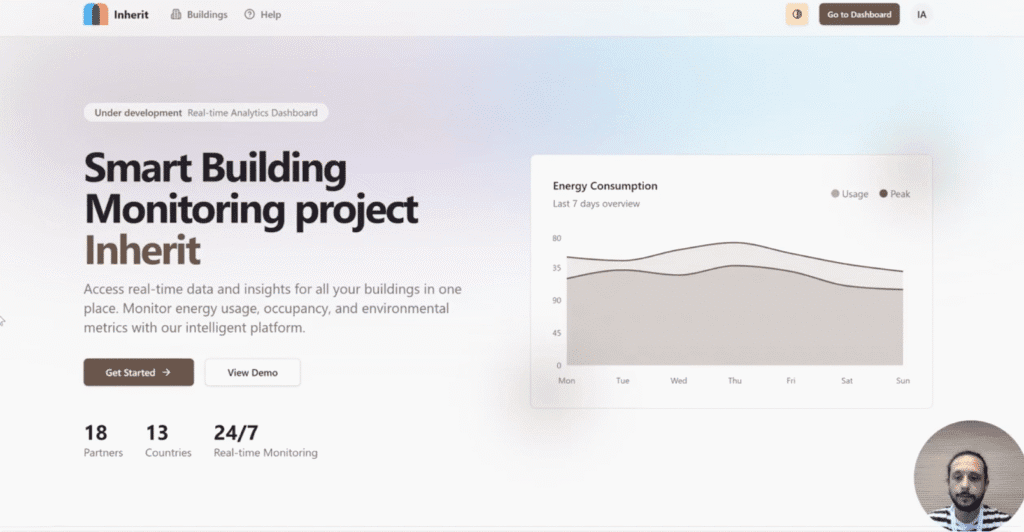
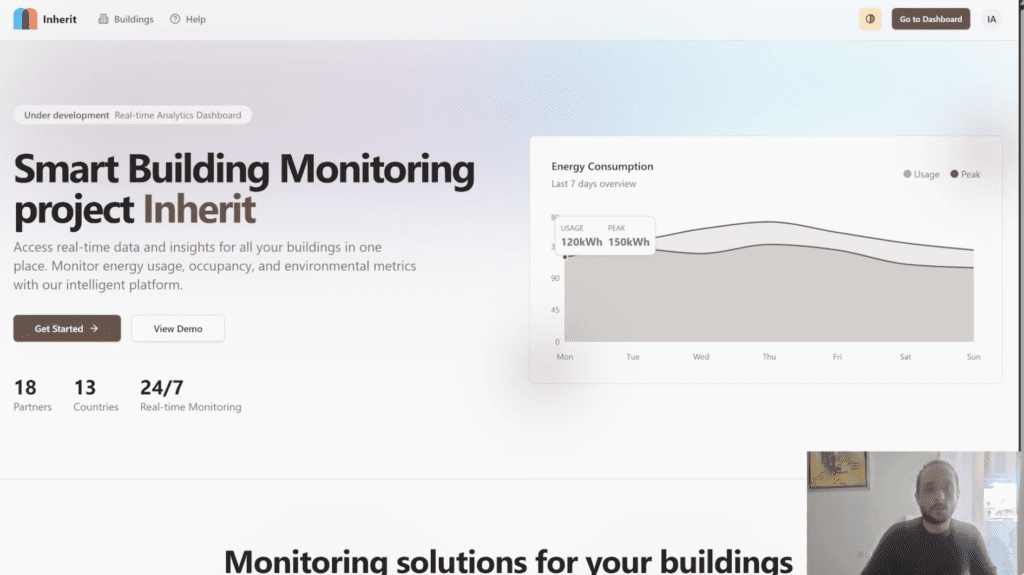
Dynamic visual dashboards
Display per-building and per-room data through interactive, easy-to-read visualisations.
-
Automatic alerts
Notify users when overcrowding or suboptimal indoor conditions are detected.
-
Historical analytics
Analyse trends over time to support predictive planning and facility optimisation.
-
Scalable architecture
Deploy efficiently across large facilities and multiple buildings.
-
Intuitive interface
Provide a responsive, user-friendly experience through a React-based platform.
Benefits
-
Helps prevent overcrowding through real-time alerts and visual feedback
-
Identifies underused areas and redistributes occupancy dynamically
-
Aligns energy usage with occupancy patterns and environmental needs
-
Detects anomalies in advance to plan interventions
-
Supports long-term planning
How it works
IoT sensors distributed throughout each building continuously track parameters such as temperature, humidity, CO₂, light, noise, and energy use. Sensor readings are transmitted via Wi-Fi or LoRa gateways to an MQTT broker, where a Python-based ingestion service preprocesses the data – filtering, normalising, and adding metadata – before storing it securely in a PostgreSQL database.
A central REST API provides seamless access to both real-time and historical data, while an integrated Alerts Service evaluates conditions against predefined thresholds, triggering immediate notifications when occupancy, comfort, or environmental parameters fall outside optimal ranges.
Users interact with the system through a responsive React-based interface, featuring dashboards that summarise building-wide performance, provide room-level details, and highlight critical conditions using intuitive visual cues. Historical analytics and trend visualisations support deeper insights, enabling informed decisions around space optimisation, energy efficiency, and occupant wellbeing.
Built with a modular, layered architecture, the platform is scalable, reliable, and interoperable, allowing it to evolve with future needs and integrate smoothly into broader smart-building management ecosystems.