

Lessons from the INHERIT study visit to Ravne na Koroškem, Slovenia
After Nicosia and Žalec, INHERIT peer-learning visits continue to strengthen knowledge exchange among partners, providing first-hand insights into how historic heritage can be reimagined through sustainable, inclusive, and forward-looking approaches.
From 4 to 6 June 2025, INHERIT partners ELLINIKI ETAIRIA (Society for the Environment and Cultural Heritage - ELLET), leading the Greek pilot site, and the Riga Planning Region (RPR), responsible for the Latvian pilot site, took part in a study visit to Ravne na Koroškem, Slovenia, exploring inspiring examples of industrial reuse, energy innovation, and heritage-led urban regeneration.
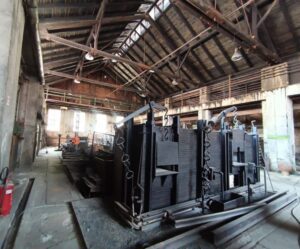
The core of the visit focused on the Ironworks Project in Ravne na Koroškem: a major initiative aimed at renovating and revitalising the Old Ironworks, a 400-year-old industrial heritage site. Once the heart of local steel production, the 5,000 m² complex was transferred to the Municipality of Ravne in 2002 and is today preserved as a steelmaking museum while gradually evolving into a multifunctional cultural, tourism, and innovation hub.
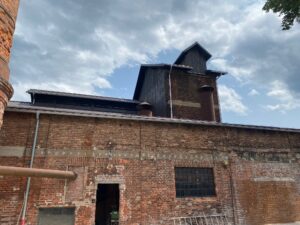
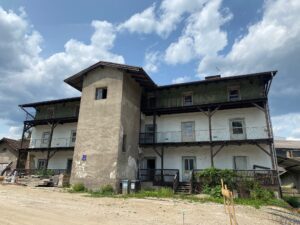
Constructed mainly at the end of the 19th and beginning of the 20th century, the complex is made of brick, stone, and iron and retains remarkable architectural and industrial features: vaulted ceilings, traditional masonry, and original production elements. The site includes the edging forge, a former workers’ dormitory with laundry facilities, a chemical laboratory, and now an old oil storage building hosting a traditional blacksmith workshop. A two-storey residential building dating back to 1870-1875 has also preserved its original appearance, making the ensemble one of the rare authentic industrial complexes of its kind in Slovenia and beyond.
During the visit, hosts highlighted the key challenges faced: improving energy efficiency while safeguarding structural and cultural integrity, modernising operations, and ensuring meaningful community access. These challenges were addressed through advanced technologies, phased planning, and strong stakeholder collaboration, demonstrating how industrial heritage can adapt to contemporary needs without losing its identity.
A particularly inspiring example was the integration of industrial waste heat from the nearby SIJ Metal Ravne steel production complex – one of Slovenia’s oldest metallurgical facilities – into the local district heating network. This was the first project of its kind in Slovenia, tackling the complexity of capturing and reusing excess heat from non-continuous industrial processes. The solution required close cooperation among multiple stakeholders and stands as a powerful example of circular economy principles and CO₂ emission reduction.
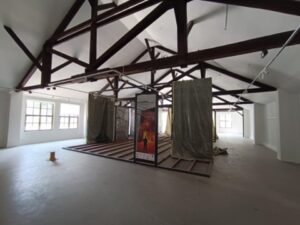
The Old Ironworks Museum area is also embracing innovation through the use of AR and VR technologies, which will offer visitors an immersive experience of iron and steelmaking history. Although still under development, the digital storytelling approach already demonstrates how collaboration between architects, engineers, and digital experts can enhance public engagement and make industrial heritage accessible to wider audiences.
What stood out across the visit was the structured, step-by-step approach to transformation: starting with in-depth analysis, moving through co-design and stakeholder engagement, securing funding, and finally implementing the project. In Ravne alone, more than 40 local, national, and international stakeholders were involved, ensuring strong ownership and long-term acceptance.
For INHERIT partners, the visit offered valuable inspiration: from waste heat recovery and digital energy management tools to inclusive governance models and phased renovation strategies.
Above all, the study visit confirmed that sustainable innovation in heritage contexts is both feasible and impactfulwhen supported by openness to learning, strong partnerships, and a clear long-term vision.