
Lessons from the INHERIT study visit to Elefsina, Greece
Following previous peer-learning visits in Nicosia, Žalec, Ravne na Koroškem and Bologna, the INHERIT study visits continued to foster knowledge exchange among partners by showcasing inspiring examples of how cultural heritage can become a catalyst for sustainable, inclusive, and community-led transformation.
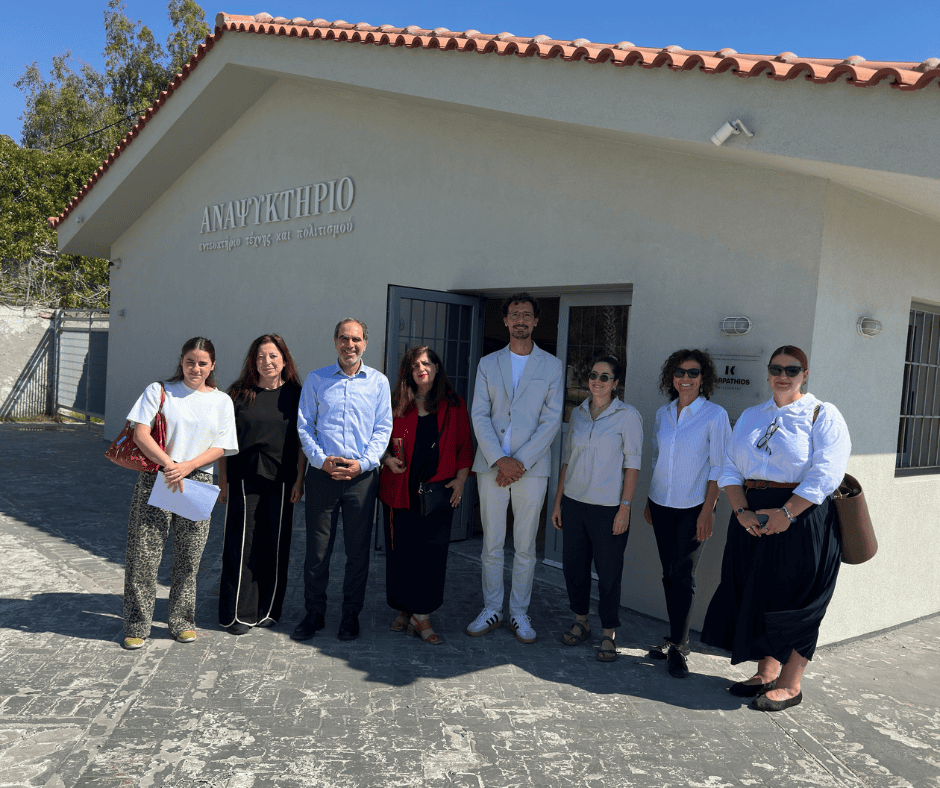
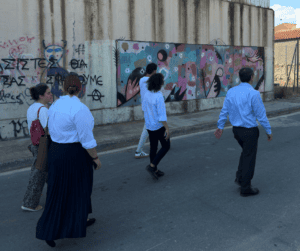
From 23 to 25 September 2025, INHERIT partners from Uppsala University and İzmir Metropolitan Municipality visited Elefsina, Greece, to explore the HeritACT pilot and discover how adaptive reuse, citizen participation, and digital innovation are reshaping a former industrial city into a vibrant cultural destination.
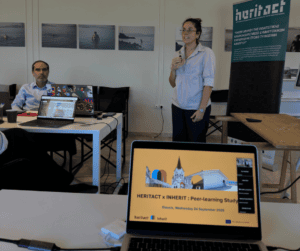
The visit officially opened with the joint webinar “HeritACT and INHERIT Peer-Learning Study Visit”, held on 24 September and streamed live to a wider audience. The session introduced the objectives of the peer-learning exchange while presenting the Elefsina pilot as an inspiring example of community-driven cultural heritage activation.
At the heart of the visit was the HeritHUB, located in Elefsina’ historic Old Canteen. Built in 1972 as a facility for the US Sixth Fleet, the building was abandoned after only two years before becoming a popular municipal canteen during the 1980s. Many local residents still remember it as a lively summer gathering place, closely connected to the adjacent open-air cinema. As part of the legacy of “Eleusis European Capital of Culture 2023″, the building was fully renovated and today serves as a multifunctional cultural venue hosting exhibitions, educational activities, community workshops, and public events.
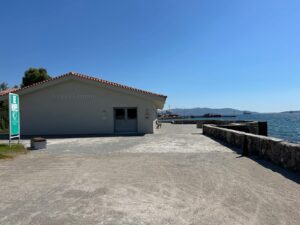
Although architecturally simple (a single-storey industrial hall with a concrete and steel structure), the Old Canteen demonstrates how adaptive reuse can breathe new life into industrial heritage while preserving its social and cultural significance. Today, the HeritHUB acts as an open space where heritage is not only preserved but actively experienced through community participation and creative activities.
One of the strongest messages emerging from the visit was the importance of putting people at the centre of heritage regeneration. Rather than focusing solely on physical renovation, the Elefsina pilot adopts a participatory methodology based on co-recognition, co-envisioning, and co-design, involving residents of all ages through surveys, workshops, and collaborative design sessions. This inclusive approach has allowed local stories, memories, and cultural identity to directly influence both architectural interventions and digital experiences, demonstrating how heritage can become a living process shaped by its community.
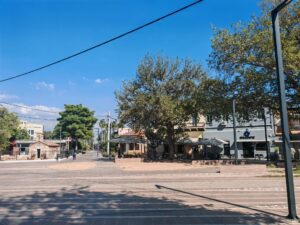
Visitors also explored how sustainability principles can be embedded into heritage activation through small-scale yet impactful solutions. Temporary structures built from recycled materials, the Green Tensegrity installation, and mobile urban furniture illustrate how circular economy principles can support cultural regeneration while minimising environmental impact. Rather than relying on large-scale infrastructure, the project shows that lightweight, reusable interventions can transform public spaces and inspire broader urban renewal.
Innovation also plays a key role in the Elefsina approach. By combining architecture, engineering, arts, and digital technologies, the pilot demonstrates how AR, VR, digital archives, and projection mapping can enrich the visitor experience and make cultural heritage more engaging and accessible. These technologies are not presented as standalone tools but as part of a broader strategy to strengthen community participation and create new ways of interacting with local history.
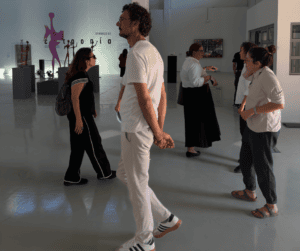
For both visiting pilots, the study visit provided valuable inspiration. The Gotland pilot identified Elefsina as an excellent example of how strong community engagement can transform former industrial areas into thriving cultural spaces. The city’s remarkable journey from an industrial landscape to European Capital of Culture highlighted the power of long-term collaboration, co-creation, and shared ownership. As one participant reflected, the transformation of Elefsina proved that meaningful change is only possible when local communities believe in and actively contribute to a shared vision for the future.
Similarly, the APIKAM pilot in İzmir recognised several practices that could be adapted to its own heritage site. Participatory design methods, urban furniture created from recycled materials, and the use of AR technologies to communicate the history of the former fire station were identified as practical and replicable solutions. The visit also reinforced the importance of combining sustainability, accessibility, and community participation when designing future interventions for cultural heritage buildings.
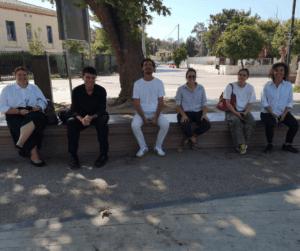
For the INHERIT consortium, the visit reinforced the value of peer learning as a powerful mechanism for exchanging knowledge across different cultural and geographical contexts. The experience provided practical inspiration for future pilot activities while confirming that community engagement, interdisciplinary collaboration, and openness to innovation are essential ingredients for creating heritage sites that are resilient, inclusive, and ready to meet the challenges of the future.